F1 vs F1B Goldendoodle: Coat, Temperament & Care
What Do F1, F1B, F2, and Multigen Mean?
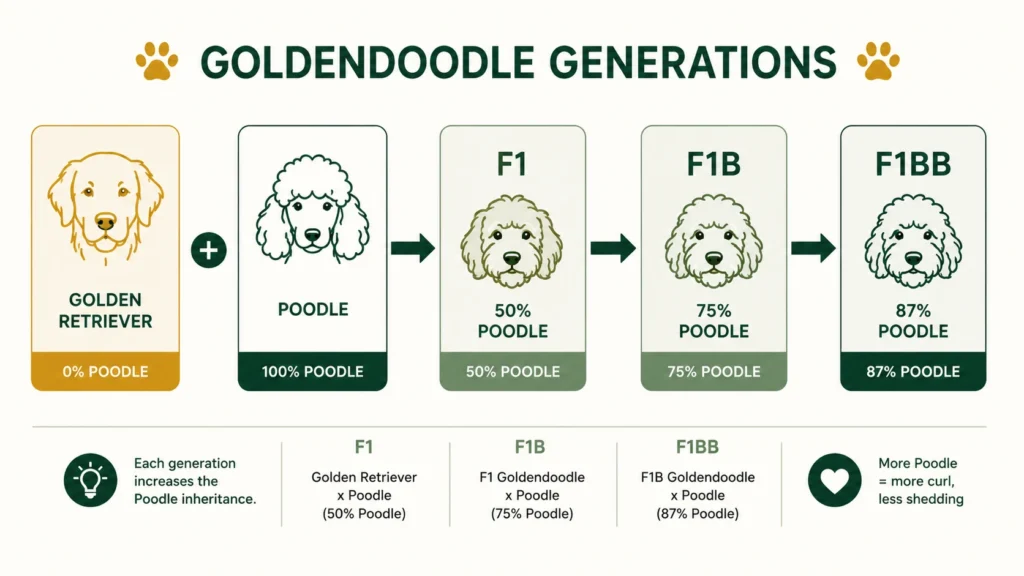
Goldendoodle generations describe how much Golden Retriever and Poodle DNA a puppy inherits. These percentages influence coat texture, grooming needs, and allergy-friendliness.
- F1 Goldendoodle (First Generation): A 50/50 mix of Golden Retriever and Poodle. They usually have wavy coats, shed less than purebred Goldens but more than Poodles, and offer a balanced blend of both parent personalities. Their genetic diversity often results in strong health and resilience (hybrid vigor).
- F1B Goldendoodle (Backcross): An F1 Goldendoodle bred back to a Poodle (≈75% Poodle, 25% Golden Retriever). With more Poodle genetics, they tend to have curlier coats, minimal hair loss, and are often recommended for families with mild allergies.
- F2 Goldendoodle (Second Generation): Produced by breeding two F1 Goldendoodles. Their coats are less predictable, ranging from flat Retriever-like fur to curlier Poodle-like coats. Personality can also vary, making F2s the “wild card” generation.
- Multigen Goldendoodle: Any Goldendoodle bred beyond the F2 generation, typically from two Goldendoodle parents. Responsible breeders select for consistency, producing dogs with allergy-friendly coats and stable temperaments. Multigens are often chosen for therapy or service work because of their reliability.
If predictability matters more to you than a particular percentage, it is worth looking beyond Goldendoodle generations. Our Australian Labradoodle vs Goldendoodle comparison covers a breed that requires four consecutive multigenerational matings before a dog counts as purebred.
F1 Goldendoodle Overview
Genetics and Parent Breeds
An F1 Goldendoodle is the first-generation cross between a purebred Golden Retriever and a purebred Poodle. This 50/50 mix blends the Retriever’s affectionate, family-oriented nature with the Poodle’s intelligence and lower-maintenance coat. Thanks to this genetic diversity, F1 Goldendoodles often benefit from hybrid vigor, meaning strong overall health and resilience.
Coat Type, Grooming, and Maintenance
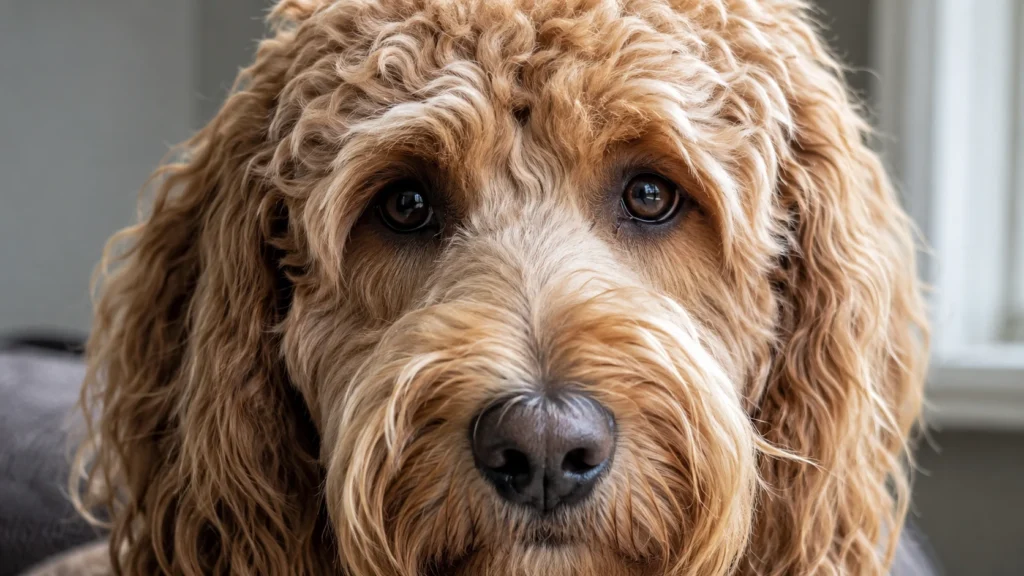
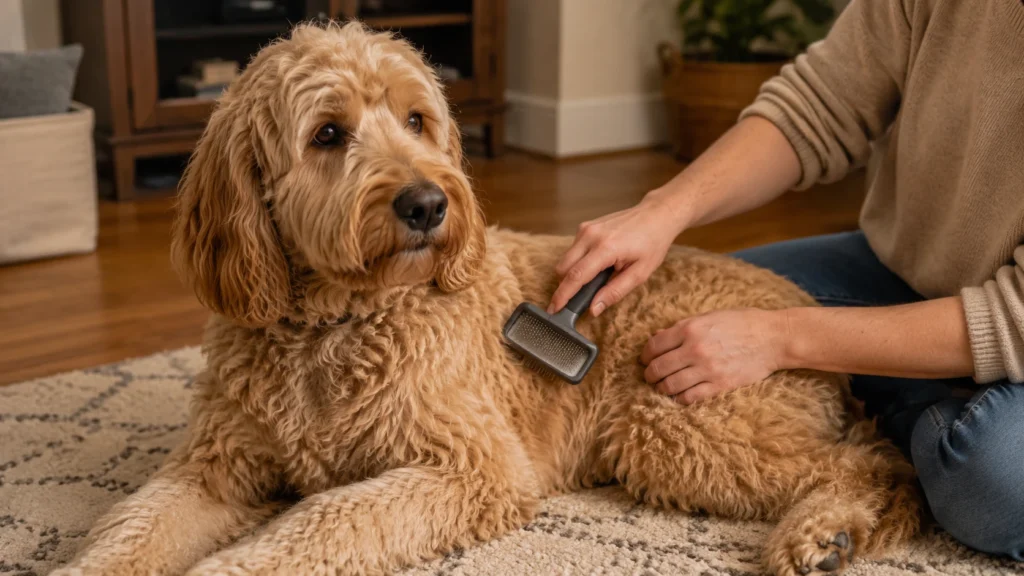
F1 Goldendoodles usually have loose, wavy coats that sit between the Golden Retriever’s straight fur and the Poodle’s tight curls. Their coats shed less than a purebred Golden Retriever but are not as consistently low-shedding as a Poodle. Regular brushing a few times a week helps prevent tangles, and professional grooming every 6–10 weeks keeps the coat manageable. Owners should expect some seasonal hair loss and routine upkeep to maintain a healthy, comfortable coat.
Temperament and Personality Traits
F1 Goldendoodles are known for their friendly, playful, and affectionate personalities. They often inherit the Retriever’s social, happy-go-lucky nature and the Poodle’s intelligence and trainability. These dogs thrive in family settings, get along well with children and other pets, and enjoy outdoor activities. While energetic, they are adaptable and can settle into calmer routines with proper exercise and training.
Pros and Cons of F1 Goldendoodles
Pros:
- Balanced mix of Golden Retriever and Poodle traits
- Strong health due to hybrid vigor
- Friendly, social, and family-oriented
- Moderate grooming compared to curlier generations
Cons:
- Not fully hypoallergenic; may trigger allergies
- Moderate shedding compared to F1B or multigen doodles
- Grooming still required to manage coat
- Personality can vary depending on which parent’s traits dominate
F1B Goldendoodle Overview
Genetics and Parent Breeds
An F1B Goldendoodle is created by breeding an F1 Goldendoodle back to a purebred Poodle. This backcross results in a dog that is roughly 75% Poodle and 25% Golden Retriever. The higher percentage of Poodle genetics makes F1Bs more consistent in coat type and often better suited for families with allergy concerns.
Coat Type, Shedding, and Grooming Needs
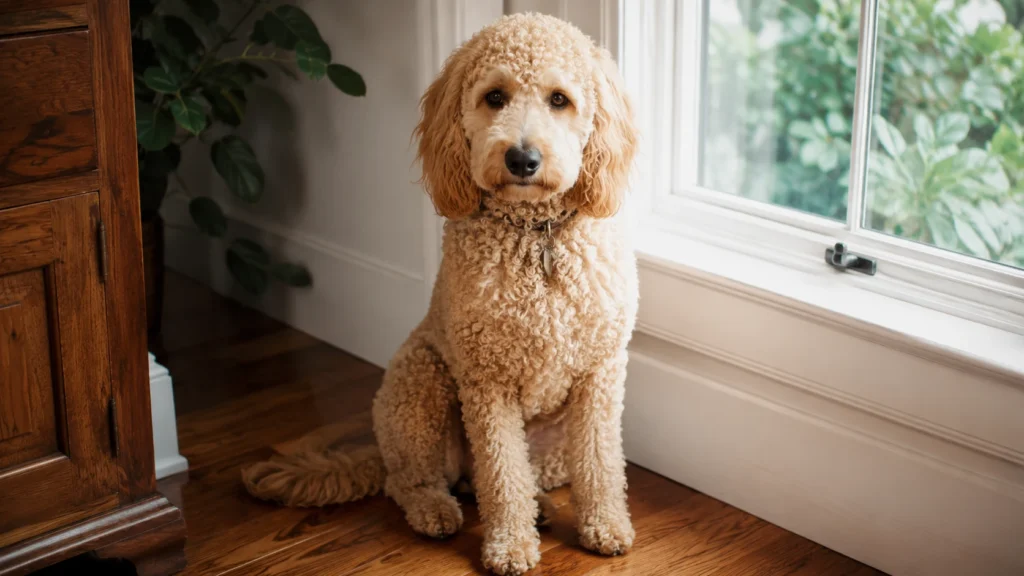
F1B Goldendoodles usually have curlier or wavier coats compared to F1s. Their coats are more likely to be low-shedding and closer to hypoallergenic, though no dog is completely allergen-free. Grooming needs are higher than F1s: regular brushing several times a week and professional grooming every 6–8 weeks are recommended to prevent matting and keep the coat manageable.
Temperament and Trainability
With more Poodle influence, F1B Goldendoodles tend to be highly intelligent, eager to please, and quick learners. They often excel in obedience training and can adapt well to structured environments, making them suitable for service or therapy work. Personality-wise, they remain affectionate and social, but may show slightly more reserved traits compared to the Retriever-heavy F1 generation.
Pros and Cons of F1B Goldendoodles
Pros:
- More hypoallergenic; reduced shedding
- Highly trainable and intelligent
- Consistent coat type compared to F1s
- Great option for families with mild allergies
Cons:
- Higher grooming needs due to curlier coats
- Less Retriever influence, so personality may lean more Poodle-like
- Grooming costs can add up over time
- Still not guaranteed to be 100% hypoallergenic
F1 vs F1B Goldendoodle: Side-by-Side Comparison
Coat, Shedding, and Allergy Differences
- F1 Goldendoodles usually have wavy coats with moderate shedding. They are less hypoallergenic and may trigger allergies in sensitive households.
- F1B Goldendoodles lean toward curlier coats with much lower shedding. With 75% Poodle genetics, they are more allergy-friendly and often chosen by families concerned about dander.
Temperament and Trainability
- F1 Goldendoodles inherit a balanced mix of Golden Retriever friendliness and Poodle intelligence. They are playful, social, and adaptable, though personality can vary depending on which parent’s traits dominate.
- F1B Goldendoodles tend to be more Poodle-like: highly intelligent, eager to please, and quick learners. They often excel in obedience and service training, while still being affectionate companions.
Size and Appearance
- F1 Goldendoodles often show more Retriever influence, with a sturdy build and wavy coats. They can range from medium to large depending on the Poodle parent’s size.
- F1B Goldendoodles are more consistent in appearance, often resembling Poodles with curlier coats, refined features, and a slightly lighter frame. Mini and medium sizes are more common in F1Bs.
Grooming and Maintenance
- F1 Goldendoodles require regular brushing and occasional grooming, but their wavy coats are easier to maintain than curlier generations.
- F1B Goldendoodles need more frequent grooming—brushing several times a week and professional trims every 6–8 weeks—to prevent matting and keep their coats healthy.
Cost Comparison
- F1 Goldendoodles are often priced higher due to their purebred parentage and balanced traits, typically ranging from $2,000–$4,000.
- F1B Goldendoodles can cost slightly more if demand is high for hypoallergenic dogs, often $2,500–$5,000+. Their allergy-friendly coats and trainability make them especially desirable.
Choosing the Right Goldendoodle for Your Lifestyle
Best Generations for Families
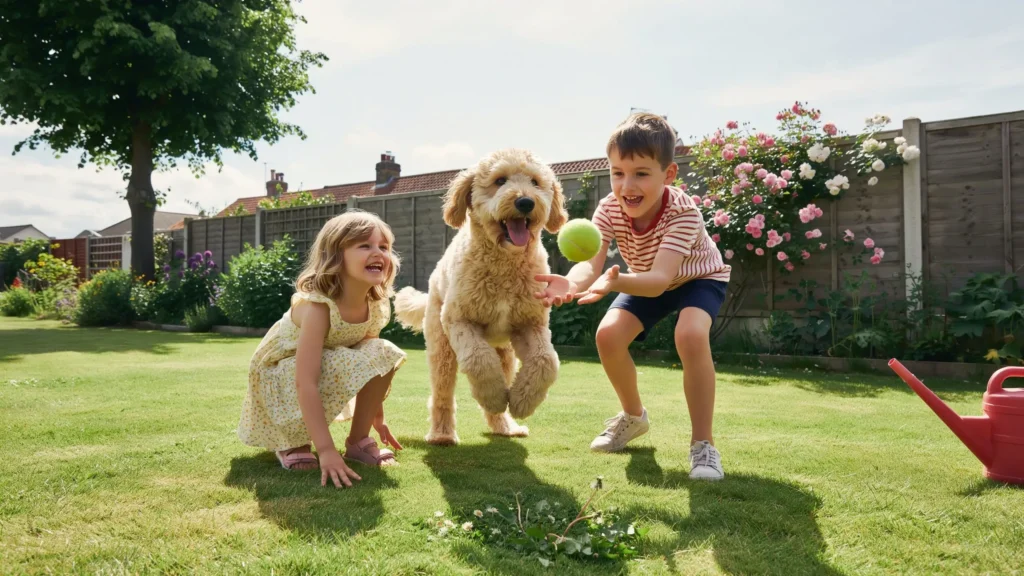
Families who want a playful, affectionate companion often enjoy F1 Goldendoodles, as they carry strong Golden Retriever traits and thrive in social, active households. For families with allergy concerns or who prefer a more predictable coat, F1B Goldendoodles are a safer choice thanks to their higher Poodle genetics and reduced shedding. Multigen doodles can also be excellent family dogs, offering consistency in temperament and coat when bred responsibly.
Best Generations for First-Time Owners
First-time dog owners may find F1B Goldendoodles easier to manage because of their trainability and lower shedding coats. Their intelligence and eagerness to please make them quick learners, reducing frustration during training. F1 Goldendoodles are also suitable, but owners should be prepared for moderate shedding and slightly more variation in coat type.
Common Myths About F1 and F1B Goldendoodles
- Myth: F1B Goldendoodles are always hypoallergenic.
Reality: No dog is completely hypoallergenic, though F1Bs shed less and are better for mild allergy sufferers. - Myth: F1 Goldendoodles are harder to train.
Reality: Both F1 and F1B generations are intelligent and trainable; success depends more on early socialization and consistent training. - Myth: Generation alone determines personality.
Reality: Temperament is shaped by parent dogs, environment, and training—not just genetics.
Working With a Breeder
How to Choose a Reputable Breeder
Look for breeders who prioritize health testing, transparency, and socialization. A reputable breeder will provide genetic screening results, clear contracts, and structured puppy-raising programs. They should also have a positive reputation, active community presence, and be willing to answer detailed questions about their breeding practices.
Questions to Ask Before Choosing F1 or F1B
- What are the temperaments of the parent dogs?
- Do you perform health testing for common genetic issues?
- How do you socialize puppies before adoption?
- Which generation do you recommend for families with allergies?
- Can I meet or see the parents to understand potential traits?
Conclusion: F1 vs F1B Goldendoodle Which Is Best for You?
Choosing between an F1 and F1B Goldendoodle depends on your lifestyle, preferences, and allergy concerns. If you love the Golden Retriever’s playful, social personality and don’t mind moderate shedding, an F1 Goldendoodle may be the perfect fit. If you need a more predictable, low-shedding coat and value trainability, an F1B Goldendoodle is often the better choice. Both generations are affectionate, intelligent, and family-friendly — the right one for you comes down to balancing coat care, allergy sensitivity, and the traits you value most in a companion.


